Showing posts with label heaven. Show all posts
Saturday, 23 May 2015
An Eternity of Heaven Or Hell. Part 3, By Rev. Clement Henry Crock. “MAN SHALL GO INTO THE HOUSE OF HIS ETERNITY” -ECCLES. 12:5.
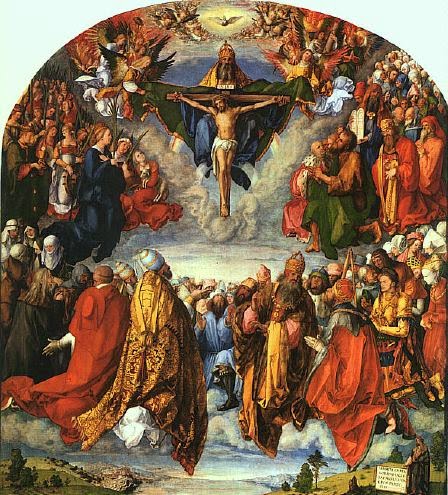
Now let us analyze the MEANING OF THE BEATIFIC VISION. It is composed of three Latin words, namely, “beatus,” happy; “facio,” I make; and “visio,” sight; all of which taken together may be translated as a HAPPY-MAKING SIGHT. Therefore, Beatific Vision means a sight which contains in itself the power to banish all pain, all sorrow from the beholder, and to infuse, in their stead, joy and happiness. Then, considering it as a perfect and permanent state, the Beatific Vision consists in three acts which are essential to its integrity and perfection. These are:
(1) the sight or vision of God; (2) the love of God; and (3) the enjoyment of God. These three acts, while distinct from each other, are inseparable; for, by excluding any one of these, the Beatific Vision no longer exists in its integrity.
Let us explain: (1) The greatest and most essential joy of the Blessed consists in the VISION OF GOD, seeing Him face to face, and the enjoyment of His infinite beauty. “Blessed are the clean of heart, for they shall see God” (Matthew 5, 8). On this earth there is nothing even remotely comparable to this vision. “We see now,” says Saint Paul, “through a glass in a dark manner, but then face to face.” This sight or vision of God is attained, not by the eyes of the body, but through the intellect- the noblest faculty of the soul- which is suddenly elevated by the light of glory, and enabled to see God as He is by a clear and unclouded perception of His divine essence. We shall then see and understand God in the Most Holy Trinity—the infinitely powerful Father Who created us, the infinitely wise Son Who redeemed us, and the infinitely good Holy Ghost who sanctified us.
“He will all glory, all perfection be,
God in Union, and the Trinity!
That holy, great, and glorious mystery,
Will there revealed be in majesty,
By light and comfort of spiritual grace;
The vision of our Saviour face to face,
In his humanity; to hear him preach
The price of our redemption, and to teach
Through his inherent righteousness in death,
The safety of our souls and forfeit breath!
What fulness of beatitude is here!
With love with mercy mixed doth appear!”
(2) The last line indicates the second act on the part of the soul in order to complete the Beatific Vision. It is an act of perfect and inexpressible love, because it is impossible for the soul to see God in His heavenly beauty, goodness, and unspeakable love for us, without loving Him with all the power of our being in return.
“What love with mercy mixed doth appear!
To style us friend, who were by nature foes!
Adopt us heirs by grace, who were of those
Had lost ourselves; and prodigally spent
Our native portions and possessed rent!
Yet have all debts forgiven us! and advance
By imputed right to an inheritance
In his eternal kingdom, where we sit,
Equal with angels, and coheirs of it.”
Although the tongue of man is powerless to describe adequately so great a wonder, this blending together of the human and divine love, yet, we see some image of it in sensible, or visible objects. In nature, the stronger always attracts the weaker. Thus the grey iron that is placed in the fire takes in heaven shall be so inflamed with the fire on the appearance of fire. So also the Blessed of God’s love, that, although their nature remains unchanged, they will differ from those on earth as fire at white heat from the frozen clod.
(3) With the seeing of God face to face, with this intense love that arises through the Beatific Vision, there follows the third act, namely, that indescribable joy which proceeds spontaneously from both the vision and the love of God. “There all the happy souls that ever were,
Shall meet with gladness in one theatre;
And each shall know there one another’s face,
By beatific virtue of the place.
There shall the brother with the sister walk,
And sons and daughters with their parents talk;
But all of God: they still shall have to say,
But make him all in all their theme that day;
That happy day that never shall see night!
Where he will be all beauty to the sight.”
We know even now what joy comes to us when we are in the company of friends we love. If the Saints could faint away from the love of God they already experienced here on earth, what must be their rapturous love when, wrapt in God’s loving embrace, they gaze upon Him as He is! The Beatific Vision, then, is what makes heaven for the soul. But it is only the beginning of our heavenly happiness; for, we shall not only see God, the source of all loveliness; we shall not only possess God, the source of all goodness; we shall not only love God, the source of all delight; but we shall become like to Him, says Saint John (I John 3, 2). “We know that, when he appears, we shall be like to Him, for we shall see Him, just as He is.”
With Ecclesiastical Approval.
********
Labels:
beatific vision,
Catholic,
heaven,
Hell,
Jesus
Friday, 22 May 2015
An Eternity of Heaven Or Hell. Part 2, By Rev. Clement Henry Crock. “MAN SHALL GO INTO THE HOUSE OF HIS ETERNITY” -ECCLES. 12:5.
What are the pains of hell? They are both positive and negative. The positive suffering in hell is that of pain. This we can readily understand here on earth, being, as we are, surrounded by so much suffering. But perhaps the greatest suffering in hell is that of loss, which we can less readily understand. The latter suffering of loss, I would rather stress as the greater by far of the sufferings endured by the damned. Nothing hurts a child more than to hear from an angry parent the words: “Depart from me!” “Get out of our house!” A soul that is lost will be deprived forever of the happiness of seeing God face to face. To its eternal regret, the lost soul will realise that, through its own fault, it has forfeited the greatest of all blessings and missed the very purpose of its existence here on earth, namely, one day to enjoy the Beatific Vision.
Here is how Saint John Chrysostom describes this pain of loss: “The fire of hell is insupportable—who does not know it? and its torments are awful. But if you were to heap a thousand hell-fires one on top of the other, it would be as nothing compared to the punishment that consists in being excluded from the beatific glory of heaven, hated by Christ, and compelled to hear Him say: “I know thee not”.” All former love between friends on earth now turns into hate; only curses, complaints, accusations, weeping, and gnashing of teeth remain. No kind or friendly word between former friends will ever fall on their ears, nothing but groans, curses, and shrieks, to which they will add their own lamentations and unavailing regrets.
Do you wish to avoid such an eternal calamity? Here is the admonition of Saint Bernard: “Descend into hell during life, that you may not descend after death.” We will then work out our salvation in fear and trembling. Many who are Saints in heaven today would never have persevered in virtue, except for the fear of hell. And if the thought of a loving and merciful God can no longer move us to do good and avoid evil, then let us, with filial fear, turn to the God of Justice and pray with the Psalmist: “Pierce Thou my flesh with Thy fear, for I am afraid of Thy judgments” (Ps. 118, 12).
* * *
“Eye has not seen, nor ear heard, neither has i t entered into the heart of man, what things God has prepared for those who love Him” I Cor 2, 9.
As we approach the twilight of life all agree that life on earth, even at its best, is an unsatisfying thing. “Within each spirit’s hidden depths
Some sweet hope withered lies,
From whose soft, faded bloom we turn
In sadness to the skies.”
Yes, no matter how numerous our successes, no matter how extensive the acquisition of our knowledge, no matter how great our wealth or physical comforts we may acquire and enjoy along life’s way, we are ever conscious of desires and yearnings that nothing on earth can satisfy. This human trait manifests itself already in early childhood, accompanies us through youth to old age, and terminates only at the grave with death.
Some have sought to satisfy these desires in creatures. Such people are sadly disillusioned through life, and especially at death. With a belated remorse such people then realise that we are destined for something incomparably better than anything this world can offer. For, as the Author of nature, God has endowed the soul of every man with an innate and fixed propensity, namely, a desire for the good, the beautiful, and the true; nay more, for the perfectly good, the perfectly beautiful, and the absolute true. The purpose of this continual restlessness is to lead us ultimately back to God, to heaven. Saint Augustine expressed it when he exclaimed: “O Lord, our hearts are restless until they rest in Thee!”
And to this natural propensity, God has further added the supernatural gift of faith through Baptism, giving us added knowledge of God and divine things; guiding us, if we follow His teachings and carry out His precepts, to the ultimate fulfilment of our exalted desires and aspirations. Then, in order to encourage us in our struggles and sorrows, Jesus has given us reminders of the brevity of our earthly pilgrimage, and promises of rewards exceedingly great if we persevere faithfully to the end. “Your reward,” He assures us, “is very great in heaven” (Matthew 5, 12). Again, “be thou faithful until death, and I will give thee the crown of life” (Apoc. 2, 10). This leads Saint Paul to exclaim: “I reckon that the sufferings of the present time are not worthy to be compared with the glory to come” (Rom. 8, 18).
This brings us to the question: What is heaven? Words fail us when we attempt to define what heaven is; our efforts are but feeble attempts to describe heaven adequately. In general, and by way of analogy, heaven has been described as “the accomplishment of all the desires of God, of creatures, and of man; as the restoration of all things into a state of absolute perfection; as the eternal repose of quiet and order.” Saint Thomas indicates that even the earth and its elements will be changed to serve the elect. The water shall then be crystal-clear; the air pure as the clearest sky; fire as bright as the sun and the stars; and the surface of the earth as transparent as glass, with a sweet unchanging temperature. Saint John pictures heaven with its gates of pearl, its streets of pure gold, its foundations of all precious stones, its light of the glory of God (Apoc. 21, 19–23). Yet, all these are mere wordpictures, in no way pretending to describe the real beauty of God’s house.
AS FOR GOD, we may describe heaven as the full enjoyment of all His works; the manifestation of His glory, power, goodness, wisdom, and all His other perfections or attributes; the loving intercourse and companionship of a fond Father with His affectionate children; the immense, eternal, overflowing love of creatures for God. AS FOR MAN, every creature will retain his own individuality, but will form a union with God so intimate that everyone will enjoy an ocean of unspeakable delights and the plenitude of his being. In heaven man will realise the accomplishment of all his legitimate desires. This comprises two things, namely freedom from all evil, and perfect possession of all good.
The negative side of heavenly happiness, namely, freedom from all evil, can be more readily understood by us mortals, because of our daily experiences. Life as a whole is often spoken of as “a vale of tears,” both for body and soul; the spirit constantly in conflict with the flesh. “We have passions that tyrannize over us, thoughts that trouble us, desires that torment us, remorse for the past, disgust of the present, solicitude for the future, weariness, bitterness, agitation.” As for the body, we are constantly plagued with pain, toil, fatigue, infirmity, disease, poverty, disaster, reverses of fortune- an unending series of evils without end. In heaven these body afflictions will cease, never to return. “God will wipe away,” says Holy Writ, “every tear from their eyes. And death will be no more; neither shall there be mourning, nor crying, nor pain anymore, for the former things have passed away” (Apoc. 21, 4). If heaven were nothing more than this, that in itself would be a blessing without comparison to anything we know of here on earth. Yet, this is only a small portion of what heaven really is, and as we unfold these heavenly beauties one by one, the words of Saint Paul will become an eternal reality when he tells us that “eye hath not seen, nor ear heard, neither has it entered into the heart of man, what things God has prepared for those who love him” (I Cor. 2, 9).
* *
“We see now through a glass in a dark manner, but then face to face” I Cor. 13, 12.
Let us never lose sight of the fact that, by God’s eternal decree, heaven is our goal, heaven is man’s destiny. Reason, revelation, and the experience of more than six thousand years unite in the one proclamation that perfect happiness cannot be found in this world. It certainly cannot be found in creatures, because they were not endowed with the powers to bestow it. Perfect happiness cannot be found even in the practice of virtue, because God, in His wisdom, has decreed that virtue should merit, but never impart perfect happiness in this world. But God has solemnly pledged to bestow “eternal life” upon all who love and serve Him here on earth. He has promised a happiness so unspeakably great that it will surpass all that our senses ever enjoyed here on earth.
From what has been revealed to us, this happiness in heaven falls into two categories, namely, the primary and the secondary happiness. The primary, or SUPREME HAPPINESS in heaven, consists in seeing God “face to face.” It consists in the possession and enjoyment of God Himself in the BEATIFIC VISION which bestows perfect satisfaction on every rational craving of our nature in the glorious resurrection of the body.
An admonition is in place here; namely, that we must guard against certain mistakes when speaking of the joys of heaven. We are very apt to build up a heaven of our own, which naturally takes the shape and colour which our sorrows, needs, and sufferings might suggest. The poor man, for example, who has suffered much from toil and want, may look upon heaven as a place of rest, abounding in all that can satisfy the cravings of nature. Another, who has endured the pangs of disease, may look upon heaven as a place where he will enjoy perpetual health of body and mind. Still another, who, in the practice of virue, has had all manner of temptations to overcome, may delight in viewing heaven as a place totally free from temptation where even the possibility of sin will be excluded. All these things, with many other pleasures that come from creatures, are, to be sure, a portion of our heavenly joys; but they are accidental, or secondary joys, that accompany the essential and primary happiness which the soul receives immediately from God in the Beatific Vision.
This distinction is so important that we might make it more understandable with an illustration. A man, for example, is gifted with perfect health of body and mind. He not only enjoys life itself, but likewise receives much pleasure from the beauties of nature, from literature, amusements, and society. Now suppose that he loses his health, and sickness lays him low. He is no longer able to enjoy either life itself, or its pleasures, because, with the loss of health, he has lost also the powers of appropriating the secondary pleasures of life; for this man, then, health is essential for the enjoyment of life, while the relish of other pleasures is secondary. So, too, in heaven: the Beatific Vision is essential, not only to enjoy the very life of heaven, but likewise to enjoy the accidental or secondary glory wherewith God perfects and completes the happiness of His elect.
Thursday, 21 May 2015
An Eternity of Heaven Or Hell. Part 1, By Rev. Clement Henry Crock. “MAN SHALL GO INTO THE HOUSE OF HIS ETERNITY” -ECCLES. 12:5.
We have arrived at the stage of life when we must realise that the hour-glass is rapidly running out, that the pendulum of life is coming to a stand still, and that time will soon be no more. With death an eternity without end begins. Every year, on Ash Wednesday, the Church solemnly reminds us of these eternal truths. With the inauguration of the Lenten season, the priest places blessed ashes upon our forehead in the form of a cross, saying:”Memento homo quia pulvis es, et in pulverem reverteris.” “Remember man that thou art dust, and into dust thou shalt return” (Gen. 3, 19). The ashes are intended to remind us of our own mortality when our bodies will return to dust whence they came. The cross upon our foreheads reminds us of our immortality; that while the body dies, the soul does not die; that through the Cross of Christ our redemption was purchased. In the words of the poet, Longfellow, the Church wishes to remind us that “Life is real! Life is earnest! And the grave is not its goal; Dust thou art,to dust returnest, Was not spoken of the soul.”
While many have tried to explain the meaning of eternity, no one has ever succeded in defining the word adequately. “Whatever you say of eternity,” says Saint Augustine, “you will fall far short of the subject. It is impossible for our weak intelligence to form an absolutely clear conception of eternity.” Some have compared the word with things we know. Boetius, for example, tells us “eternity is the complete possession of a life that has no end.” Saint Bernard calls it “a condition comprising in itself all times, the present, past and the future.” Saint Gregory says, “eternity is one long day, never followed by night.” Some have compared eternity with the sands on the sea shore, drops of water in all the oceans of the world, or the multiple letters in the books that have ever been printed. But in the fanciful flight of our imagination we might still look forward to a time when every grain of sand might be counted, every drop in the oceans or letters in all the books accounted for, and yet, when all that is accomplished we would still be forced to say that eternity had just begun.
This is the eternity that confronts us at death. From the moment you and I were born into the world, each of us was started on the road to eternity. Mark the words of Holy Writ, saying, “Man shall go into the house of HIS eternity” (Eccles. 13, 5). Note the words, “his eternity!” Your eternity, my eternity, because everyone prepares his own eternity. The Creator has endowed us with understanding and free will. The choosing is ours to determine what kind of an eternity awaits us. The difference lies between sinner and saint. In Christ’s own words, the former will be greeted with the words: “Come, ye blessed of my Father, possess you the kingdom prepared for you”; the latter with the words: “Depart from me, ye cursed, into everlasting fire” (Matt. 25, 34–41).
Proper reflection upon these words and what kind of eternity might await them, led many people to alter the course of their lives and prepare for a happy eternity. Ask the Saints of God who have gone before us and are now enjoying their eternal reward in heaven at this moment what prompted them to lead heroic lives. It was the thought of eternity that made Saint Stephen remain steadfast in his martyrdom, that sustained Saint Lawrence and rendered endurable his death in the flames; that made St. Augustine desire only crosses and suffering in this life and led him to exclaim: “Here burn, here cut, O Lord, but spare me in eternity.”
After so many of our patriotic men and women had faced death on the far-flung battle fronts during the last World War, many others returned and sought seclusion in prayer and contemplation behind cloister and monastery walls. The same thought of eternity prompted kings and emperors to relinquish their crowns and renounce the world. Pope Celestine V resigned his eminent office in order to lead the life of a hermit. The thought of eternity has prompted untold others to a life of prayer, fasting, study, work and the fulfilment of the duties of a Christian, of one’s state of life, of every kind of penance, of keeping all the Commandments under the stress of temptation and adversity, in every nation and clime down through the centuries. Like Saint Bernard, they look upon life as seeding time and their good deeds as the “seeds of eternity.”
These many cogent facts and examples should prompt us to reflect upon the thought of eternity and prepare for it while it is still time. For,
“Life is short—and death is sure;
The hour of death—remains obscure.
A soul you have- and only one;
If that be lost, all hope is gone.
Waste not your time—while time shall last
For after death “tis ever past.
The all-seeing God your Judge will be—Or heaven or hell, your destiny.
All earthly things will fleet away.
Eternity shall ever stay.”
By remembering this now, then, when our eternity begins, may it be said of each one of us: “Blessed is he that is found without blemish. For he hath done wonderful things in his life. He could have transgressed, and hath not transgressed; and could do evil things, and hath not done them. Who hath been tried thereby and made perfect, he shall have glory everlasting” (Eccles. 31, 8–11).
* * * *
“Then He will say to those on His left hand, “Depart from Me, accursed ones, into the everlasting fire” “ -Matt. 25, 41.
Some years ago the daily newspapers carried a gripping story, captioned with large glaring letters, EXILED. The story described the departure of 670 convicts of the worst type who had been banished from their native land to a penal colony on a small island in the South Atlantic. Hysterical over the prospects before them, these desperados were chained and handcuffed and herded into steel cages in a stinking prison ship on which they were slowly carried out from the harbour of their native land. They were on their way to DeviI”s Island where they faced a cheerless and utterly hopeless future in a tropical heat to which they were not accustomed, and in quarters so restricted as to constitute a prison without walls. There these criminals of the worst type, rascals, murderers, thieves and thugs, were to waste away their lives and die, forgotten by kith and kin as completely as the public forgot them the hour the ship sailed.
These criminals deserved little mercy, but the nature of their punishment is one of the cruelest that can be devised. Some poet has said: “Stone walls do not a prison make, nor iron bars a cage.” It is not so much the physical ordeal confronting such convicts that is so terrible as the hopelessness of their plight, the horrible nostalgia in a far-off and forbidding land, the terrible mental depression which makes the punishment so gruesome. It is the nearest approach to hell itself that man can conceive.
But the word “hell” is no longer a welcome word in polite society. Much less will such tolerate any mention of eternal punishments or of everlasting fire and torments in hell. Now, we wish to frighten nobody. But silence will not extinguish the pains of hell, nor render them non-existent. Were all of us to agree to remain silent on the subject, hell would still continue to exist; for as sure as there is a heaven to hope for, so surely is there a hell to fear. Our Lord told us so, and God cannot deceive. And since this is true, we should think of it and speak of it more frequently; for knowing it, we shall fear it, and fearing it, we shall avoid it. “If those who argue against hell,” says Saint John Chrysostom, “would embrace virtue, they would soon be convinced of its existence.” Hence, like her Divine Founder, our Church teaches there is a hell; that souls there suffer a punishment which will never end; that both body and soul will suffer eternally after the General Judgment; that there is a fire in hell which will last forever; that the damned suffer pain, misery and despair, loss of God, indescribable agony, and unavailing remorse.
Here are some of the reasons for our belief: In the twenty-fifth chapter of Saint Mat thew’s Gospel, our Lord draws a vivid picture of the Last Judgment. All the people of the entire world will be gathered together. The good will be separated from the wicked. The Lord will say to those on His right hand: “Come, ye blessed of my Father, possess you the kingdom prepared for you.” But to those on the left He will say: “Depart from me, you cursed, into everlasting fire, which was prepared for the devil and his angels.” Immediately Christ adds these significant words: “And these shall go to everlasting punishment; but the just into life everlasting.” Saint John (Apoc. 20, 9–10), describes hell in these words: “There came down fire from God out of heaven, and devoured them; and the devil, who seduced them, was cast into a pool of fire and brimstone, where both the beast and the false prophet shall be tormented day and night for ever and ever.”
And Saint Paul is even more specific in singling out those who will not enter into the kingdom of heaven. “Know you not,” he asks, “that the unjust shall not possess the kingdom of God? Be not deceived! Neither fornicators, nor idolators, nor adulterers, nor the effeminate, nor thieves, nor the covetous, nor drunkards, nor railers, nor extortioners, shall possess the kingdom of God” (I Cor. 6, 9–10; Gal. 5, 19). “These words would be untrue,” says Saint Augustine, “if the damned after a length of time, would be set free from hell, if they would yet possess the kingdom of God.” And Saint Gregory adds: “The justice of the Supreme Judge requires that they who in this life would never be without sin, should never be without punishment in the hereafter.” Then Saint Chrysostom argues this way: “All of us, Greeks and Jews, heretics and Christians, acknowledge that God is just. Now, many who sinned have passed away without being punished, while many others who led virtuous lives did not die until they had suffered innumerable tribulations. If God is just, how will He reward the latter and punish the former, unless there be a hell and a resurrection?”
If further proof for the existence of hell is needed, then let us hear from a few pre-Christian and pagan sources. The ancient Greeks believed in their Tartarus. Plato says: “The wicked will be precipitated into Tartarus, never more to come out.” Xenocrates taught that the souls of the wicked wander about in dark places under the earth. Plutarch held that the wicked, after death, are confined in a place that no man can open. The Latin poet, Virgil, in his Aeneid, portrays to us the never-ending sufferings of the damned souls. The Jews compared hell to Gehenna, in a valley near Jerusalem, in which human beings, especially babies, were sacrificed to the god of fire, Moloch. Hence Plato, the poet and philosopher, declares in his Phaedo: “After having maturely weighed all things and tested them severely, I have found nothing that is more compatible with wisdom, reason and truth,” than the belief in hell and its punishments.
There are those who say that such an eternal punishment is unreasonable, altogether out of proportion to a sin committed which takes but a brief moment of time. But such a comparison is not correctly drawn. We must first consider the nature of mortal sin for which hell is the punishment; secondly, the nature of the damned who are undergoing the punishment; and, thirdly, the nature of God Who imposes and enforces the punishment.
No one will go to hell against his will. Only those are there who have died unrepentant, with mortal sins upon their souls. And a mortal sin is a deliberate defiance of God and His laws in grave matter in which the sinner knowingly and deliberately exclaims defiantly: “Non serviam!” “I will not serve!” “Even here on earth,” says Saint Thomas, “the fact that adultery or murder is committed in a moment, does not call for a momentary punishment; in fact, these crimes are sometimes punished by imprisonment or banishment for life, sometimes even by death; this punishment, in its own way, represents the eternity of punishment inflicted by God.” And if the punishment were not eternal, then the worst criminal could for all eternity remain in defiance of God, knowing that in due time the punishment for his crime would cease. Therefore, it is man, not God, who creates an eternal punishment for himself. God merely permits it, in order not to frustrate the free will of man which makes man accountable for his good as well as his evil deeds.
Labels:
Catholic,
heaven,
Hell,
JESUS CHRIST,
judgment
Saturday, 9 May 2015
What Happens After Death? part 5. BY REV. G. J. MACGILLIVRAY, M.A
THE CONSUMMATION
When the soul has reached Heaven, it has reached its goal. It has found perfect and eternal satisfaction. But a soul without a body is not a complete human being. Consequently, as God has revealed to us, there is some day to be a resurrection of the body. When this world has run its course, Our Lord will return, as He plainly said, for the Last judgment. There will be a general resurrection of the dead. That is to say that the bodies which we lost in death will be restored to us, so that we shall again be completed human beings. Then will take place the Last judgment, or the General judgment, as it is also called, to distinguish it from the Particular judgement of each soul, which takes place, as we have seen, the moment after death. People sometimes wonder, if each soul is judged at death, what need there is of the General judgment. Several reasons may be assigned. One reason is that, as a man is not only a private individual, but also a member of the human race, so it is fitting that after each man has been judged separately there should be a general judgment of the human race as a whole. The Particular judgment is the judgment of the individual; the General judgment is the judgment of Mankind as a whole. And, again, it seems necessary for the full manifestation of God’s justice. The first judgment, of each individual was private. There must, therefore, also be a public judgment, in which the secrets of all hearts shall be disclosed, and the justice of God made manifest to all.
But what of the nature of the bodies that we hope to have in Heaven after the Resurrection? We shall rise again with our own bodies, the same bodies that we have now. So much is of faith. But it is also certain that these bodies will be greatly changed. They will not necessarily consist of the same particles of matter as compose them now, for the identity of the body does not depend upon the identity of the matter composing it. That is clear enough, since the matter in our bodies is continually changing even in this life. And that disposes of a number of superficial difficulties about the same matter having possibly formed part of several bodies.
It is also clear that the body will be changed in many other ways, since our bodies, as they are now, are not fitted for an eternal existence. St. Paul says that “it is sown a natural body; it is raised a spiritual body.” This cannot mean that it has the nature of a spirit, but rather that it is completely subject to the spirit. It will be free from suffering, from corruption, and from all the natural necessities of this life, and endowed with a supernatural beauty and glory, sharing in the glory of the glorified soul. But more than that we can hardly say, since the conditions of that eternal life are so utterly beyond our experience.
After the Last judgment there will be no more change. This earth will have passed away. Purgatory will have ceased to be. Only Heaven and Hell will remain. There will be no more change and no more time, but only Eternity. Sometimes here the thought will occur: shall we, then, not get tired of the happiness of Heaven? That is one of our difficulties, that we cannot imagine a happiness which never pass, of which we shall never grow weary throughout eternity. How is it that this will not happen? The first reason is that it is a complete and perfect satisfaction of all our desires. We grow weary of every earthly happiness simply because it is not perfect, it is not completely satisfying. That is why we always desire some other object of happiness, something that will give us what was wanting in the last object. But in Heaven that cannot be so, because the Object of our happiness there is God Himself, who is infinitely perfect, and can leave nothing more to be desired. And the second reason is, that of that infinite Object we can never reach the end. Through all eternity we shall always find some new beauty, some new goodness, some new satisfaction. It is true that we shall grasp and possess Him all at once and completely, to the utmost capacity of our nature. And yet, just because He is infinite and we are finite, we shall in some wonderful way find Him always new, we shall see in Him new goodness and new beauty. He is “beauty ever ancient and ever new.”
And, again, the joy of Heaven will never pall, just because it is so utterly unselfish. It is sometimes supposed that the Heaven to which we look forward is a mere selfish enjoyment. In fact, it is quite the contrary. We have already seen that rest in Heaven does not imply inactivity, but the very reverse. It is difficult for us to understand this, because it is a kind of activity different from any that most of us are accustomed to practice in this life. The nearest approach to it is found in that state of infused contemplation which some of the mystics have tried to describe. All the ordinary powers of the mind, imagination, and reason are suspended. But the soul itself is intensely active, absorbed in contemplation. Something akin to that, but far more perfect, must be the activity of the soul in Heaven. And it is not selfish, but just the opposite because the soul absorbed in God has forgotten itself. It is utterly selfless. The very essence of its happiness lies in this, that it has ceased to think of itself, it has no desire of its own, but lives only to give glory to God. In Heaven we shall at last understand that perfect happiness consists in forgetting ourselves, in living not for ourselves, but solely for God, giving ourselves to Him, losing ourselves in Him, living only to love Him, to adore Him, to give Him the glory that is His due.
Friday, 8 May 2015
What Happens After Death? part 4. BY REV. G. J. MACGILLIVRAY, M.A
HEAVEN
Every soul that departs from the body in a state of grace must eventually reach Heaven. It may be immediately, or it may be after a period, short or long, of purification in Purgatory. Now, what do we know about Heaven? Certainly we can form no very clear idea of what it is like. It is utterly beyond our power to imagine it. As St. Paul said long ago, “Eye hath not seen, nor ear heard, neither hath it entered into the heart of man what things God hath prepared for them that love Him.” We cannot see, we cannot hear, we cannot imagine the joys of Heaven, because they are utterly beyond anything of which we have any experience in this world. And yet God has revealed certain facts about it.
First, then, Heaven is a place of rest, of perfect happiness, of complete satisfaction. That is so because there the soul has reached its goal. It is at the end of its journey. It is, as the theologians say, in termino. Here we are “in via,” on the way. That is why here we are never at rest. We can never be completely satisfied. There is always something more to be desired. Therefore our life is restless, a constant seeking of something new, something more satisfying. Even death does not necessarily bring rest. People sometimes speak in a general way of the dead as being at rest. But they are not necessarily at rest. The souls in Hell are certainly not at rest, and never will be. Even the souls in Purgatory are not yet at rest. That is why we continue to pray for them, “Requiem aeternam dona eis, Domine”- “eternal rest give unto them, O Lord.” The souls in Purgatory are still restless, because they are still unsatisfied, still waiting for the consummation of their joy. No, it is only when the soul has reached Heaven that it is at rest, because then it has reached its goal. This rest, however, does not mean inactivity, idleness, or stagnation. That could never be a state of happiness. Perfect happiness was defined long ago by Aristotle as a perfect activity. And that is the life of Heaven. It is intense activity, but a restful, peaceful activity, without effort, strain, or weariness. The soul is at rest, because it is perfectly satisfied. It has no fear, no anxiety, no unsatisfied desire.
But what is it that so completely satisfies the soul in Heaven? It is no created object, but God Himself. The soul is satisfied because it possesses God, the infinite Good. We must not think of the happiness of Heaven as the possession of one finite object of happiness after another, a mere never ending succession of finite joys. That would not be complete satisfaction, because it would leave always something more to be desired. Heaven is not that. It is the complete possession, all at once and eternally, of the infinite Source of all happiness, which is God Himself. Nothing less could satisfy the immense capacity for happiness of the human soul.
In Heaven we shall possess God. That is to say that we shall be perfectly united with Him in mind and will, in knowledge and in love. We are told that in Heaven we shall “see” God. “Blessed are the clean of heart, for they shall see God.” “We see now through a glass in a dark manner, but then face to face. Now I know in part, but then I shall know even as I am known.” Indeed this “Beatific Vision” of God is often spoken of as the essential happiness of Heaven. Of course this does not mean that we shall see Him with our bodily eyes. That is manifestly impossible, for God is a Spirit and invisible. Moreover, the Saints in Heaven now, with the exception of our Blessed Lady, have no bodily eyes, and will have none until the resurrection in the last day, and yet they certainly enjoy the Beatific Vision. No, it is an intellectual vision, a vision of the mind. We get a little nearer the fact, if we consider how we grasp ideas with the mind. We often speak of that purely intellectual process as “seeing.” We “see” things with the mind when we grasp them intellectually. But that falls very far short of the way in which we shall apprehend God in the Beatific Vision. For it is not the mere idea of God that we shall grasp, but God Himself. We cannot understand that now, because we have not the necessary faculty. In Heaven it will be possible because of what is called the “Lumen Gloria,” the Light of Glory. That is a supernatural gift, which the Saints have in Heaven, and which so raises the powers of the soul that it is able to perceive God directly, without bodily eyes and without the help even of any ideas. It does not see God outside itself, but within the very substance of its own being. It finds God in itself, and itself in God, so that it knows Him, as it were, from within the depths of His own Being.
To see God! How can we get some notion of what that means? In this world we dimly perceive a few of God’s works. We are delighted by the innumerable beauties of form and colour and sound, the glories of nature, of art, of music. Still higher is the intellectual happiness, when we explore and grasp with the mind some of the hidden secrets of nature. As we explore further and further, we are lost in admiration at the wonders of God’s works. And a higher happiness still, for those who are capable of it, is to Contemplate purely abstract truth, to try to grasp something of the hidden truth that lies behind the things that appear to the senses. But all these things are mere dim reflections of the uncreated, infinite Being of God, who is the Source of them all. He is the plenitude of Being, Being itself, comprising in Himself all Truth and all Beauty, or rather He is Himself all Truth and all Beauty. What must be the joy of seeing Him as He is in that unimaginable intimacy of the Beatific Vision!
But this union of mind with Mind implies something further. It implies a perfect union of love, a union of perfect friendship. It was said by God in the beginning that “it is not good for man to be alone.” We know how true that is. We cannot live in loneliness, in isolation. Our nature requires that we enter into relations of love and friendship with others. That constitutes our chief source of happiness in this world. And yet it is in this that we are never completely satisfied. There is no friendship in the world which is completely and lastingly satisfying, In the best of friends there is always something wanting, and, even if we could find a perfect friend, perfect union with him would be impossible. There is always a large part of our inner life, which we must live alone, which we can share with no human being.
But all that is wanting here we shall find in Heaven in God. For there God will give Himself to us in the most real and intimate friendship. It is an overwhelming thought, that God Himself, the infinite God; should be our Friend. But it is true. God will give Himself to us without reserve, and we shall give ourselves without reserve to Him. We shall be united in so perfect a love that we shall, as it were, lose ourselves in Him. We must, however, beware here of the idea found in many Eastern mystics, that we shall be so absorbed in God as to lose our own individuality and personality. That is not the case. We shall keep our own individuality. But, short of losing that, it is impossible to exaggerate the closeness of the union between God and the soul in Heaven.
People sometimes ask whether we shall find and recognise our earthly friends in Heaven. Certainly we shall. There is no doubt about that. We shall find them in God, for in God we shall find everything that is necessary to our happiness. And not only shall we know them, but we shall know them in a far more intimate way than was ever possible here. We shall find them free from all imperfections, and we shall have far more intimate union with them. And not only shall we and those whom we have known and loved here on earth, but a host of other friends. First and above all Will be Jesus Christ our Lord in His Sacred Humanity. For He remains Man as well as God eternally, and will be in Heaven for ever the centre of redeemed humanity, our glorious King, but also the most intimate Friend of every one. We have known something of that loving friendship even here on earth, possessing Him, as we do, in the Blessed Sacrament. But how much more wonderful to see Him face to face in His glory, and to live for ever in His love! Then there will be the Blessed Mother of God, that gracious, tender Mother, whom we have learnt to love so dearly, though as yet we have never seen her face. Second only to her Son, she will be the unspeakable joy of all who have learnt to love her on earth. And then all the holy Apostles, Martyrs, Confessors, Virgins-all those holy men and women, known and unknown, all will be our friends and loving companions there. We shall find them and love them all in God.
Subscribe to:
Posts (Atom)